Move-in Special
Get Up to 2 Months Free Base Rent!*
*12 month or longer lease term required. Other costs and fees excluded. See leasing agent for more information.
Photo Credits: National Park Service - Rock Creek Park
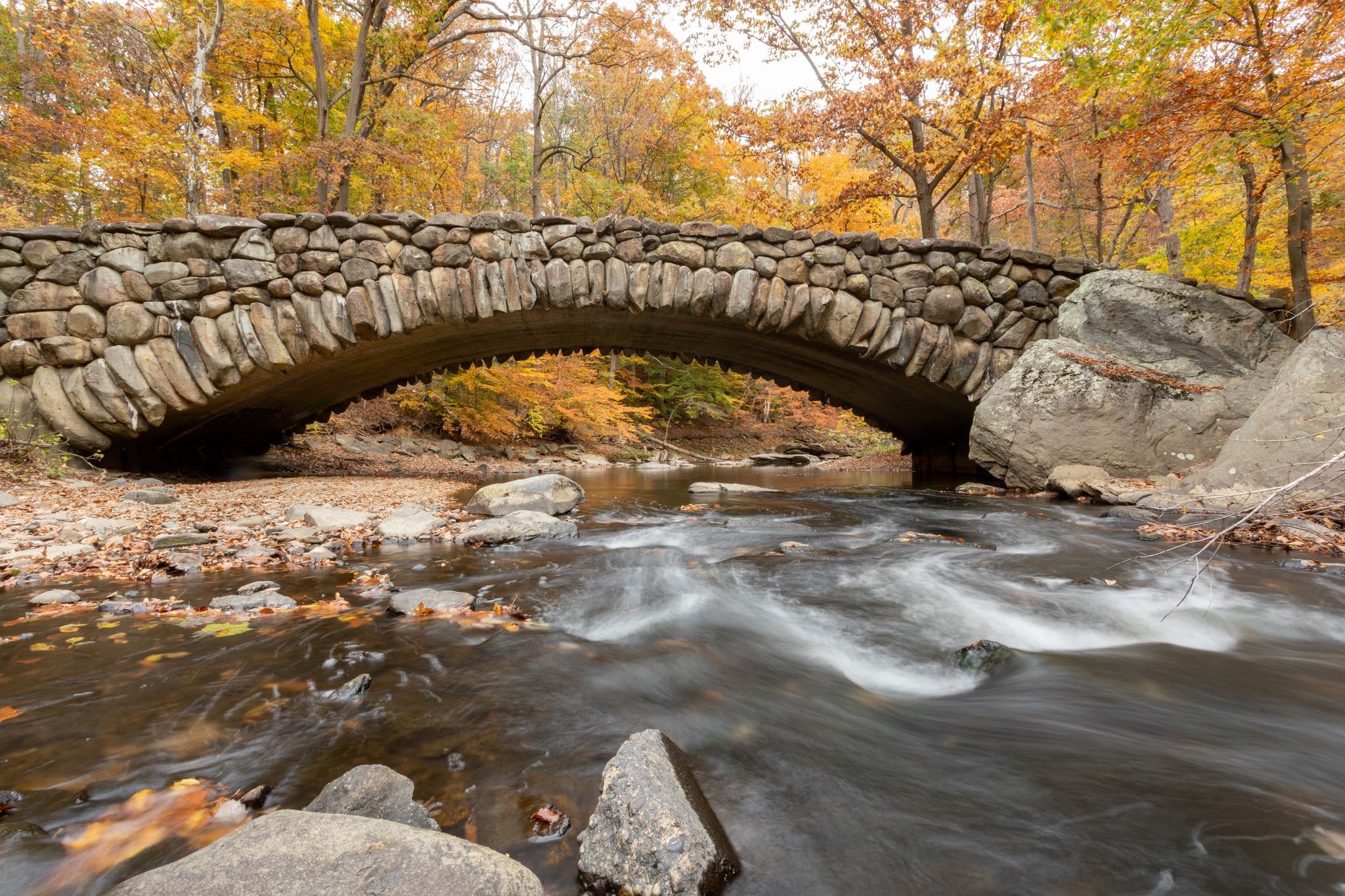
Rock Creek Park is a vast ribbon of forested trails, winding creek beds, and historic landmarks that cuts through Northwest DC. Residences love it for its mix of scenic hiking trails, paved multi-use paths, creekside views, and historic sites like Peirce Mill and Boulder Bridge.
Unlike many city parks, it stretches for miles as a continuous natural corridor, offering everything from quiet birdwatching areas to cycling routes along Beach Drive, plus amenities like a nature center and planetarium, golf course, and [tennis complex.(https://rockcreektennis.com). The park follows Rock Creek, a stream that runs roughly 33 miles from Montgomery County, Maryland, down to the Potomac River.
Rock Creek Park runs through or borders a long stretch of Northwest DC neighborhoods, including Cleveland Park, Woodley Park, Adams Morgan (eastern edge), Mount Pleasant, Columbia Heights (western edge), Crestwood, Crestwood North, 16th Street Heights, Brightwood, Shepherd Park, and Chevy Chase DC, with smaller portions touching Kalorama and Dupont near its southern gateways.
Rock Creek Park was established in 1890, making it one of the oldest federally managed urban parks in the United States. Created during the same era as many major national parks, its purpose was to preserve the Rock Creek valley as a natural refuge within a rapidly growing capital city. Long before it became a park, the area was home to Indigenous peoples for thousands of years, later becoming farmland, mill sites, and early transportation routes in the 18th and 19th centuries. Peirce Mill, still standing today, is one of the best examples of that early industrial history.
The creek was known for its rocky bed and steep, stone-lined banks, so early settlers and surveyors referred to it simply as “Rock Creek,” a name that stuck long before the land became a protected park.
The park offers more than 32 miles of trails, but only a portion of them are paved. The primary paved route is the Rock Creek Park Multi-Use Trail, a hard-surface path that runs from M Street NW in Georgetown north through the park to Broad Branch Road NW. This is the park’s main paved corridor, used for walking, running, and biking. This trail also connects to a paved segment that continues south along Rock Creek and Potomac Parkway, creating a continuous route from the National Mall into the park.
The National Park Service and DDOT have undertaken a multi-year project to rehabilitate key portions of the Rock Creek Park Multi-Use Trail—repaving long stretches, improving crossings, and upgrading signage.
Several smaller paved spurs connect neighborhoods to this main trail, especially around Peirce Mill and the National Zoo, though many interior trails deeper in the park are not paved.
All paved roads and trails in the park are open to bicyclists, including the portions of Beach Drive that are closed to cars on weekends, when the roadway becomes a wide, smooth surface for walkers, runners, and cyclists.
For people who want the “wilderness within the city” experience, these are the trails that define Rock Creek Park’s character. The unpaved trails form an extensive network on both sides of the creek, most of them running along the hillsides, ridgelines, and valleys above the main paved routes.
Two well-known unpaved routes are the Valley Trail and the Western Ridge Trail, which run roughly parallel to each other for miles. The Valley Trail follows the east side of the creek, dipping into ravines and climbing small hills, while the Western Ridge Trail traces the higher ground on the west side, often with more elevation and a more rugged feel. Dozens of smaller connector trails link these two main routes, especially around Pierce Mill, the Zoo area, the Klingle Valley, Broad Branch, and the Piney Branch canyon.
Most unpaved trails are natural-surface singletrack: dirt, rocks, tree roots, and occasional stream crossings. While scenic, lush, and shady during warmer months, they can be also be muddy after rain, and icy in winter. Many interior trails—especially north of Military Road—are narrow, rooty, and lightly trafficked.
Rock Creek Park is one of the most popular places to bike in Washington, DC, and many people use it for both recreation and commuting. The paved Rock Creek Park Multi-Use Trail and the Rock Creek & Potomac Parkway Trail create a continuous north–south bike corridor connecting neighborhoods like Woodley Park, Cleveland Park, and Chevy Chase to downtown and the National Mall. On weekends and holidays, long stretches of Beach Drive close to cars, giving cyclists a wide, smooth roadway with rolling scenery and almost no traffic. Weekday commuters often use the paved trail and open portions of Beach Drive as a quieter, greener alternative to city streets, especially for trips between upper Northwest DC and downtown.
The National Park Service restricts biking to paved trails and paved roads only, which keeps the single-track hiking paths safe for hikers, runners, and wildlife.
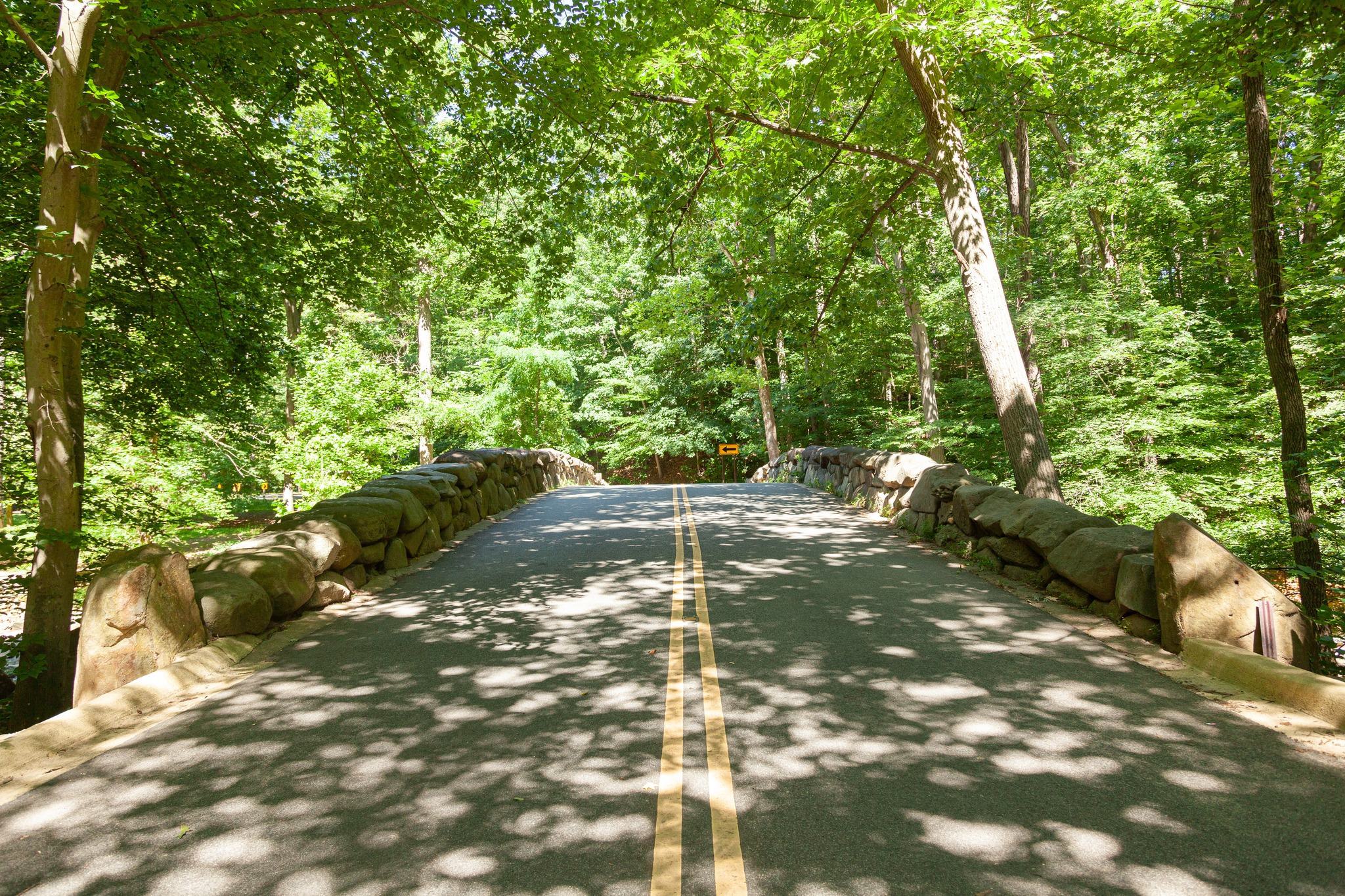
Beach Drive is one of Rock Creek Park’s defining features—a winding, tree-lined roadway that follows the creek through the center of the park. On weekends and holidays, large sections of it close to car traffic, transforming the road into a wide, paved route for walkers, runners, and cyclists. The scenery is classic Rock Creek Park: forested slopes, stone bridges, and long, quiet stretches where the city feels far away.
Dogs are welcome in Rock Creek Park, but they must be on a leash no longer than six feet at all times, including on trails, picnic areas, and open fields. There are no designated off-leash areas anywhere in the park, and owners are required to clean up after their pets and keep them under control to protect wildlife and other visitors. The park’s size and wooded trails make it a great place for dog walking, but the leash rule is strictly enforced for safety and environmental protection.
Peirce Mill is a historic 19th-century gristmill located in the heart of Rock Creek Park, built in the 1820s by the Peirce family to grind corn, wheat, and rye using water power from Rock Creek. It’s the only surviving mill of several that once operated along the creek, and today it’s restored, open to the public, and occasionally runs live milling demonstrations with its rebuilt machinery. The mill sits at one of the park’s main trail and picnic hubs, making it both a historic landmark and a natural gathering point for visitors.
The Rock Creek Park Nature Center & Planetarium is the park’s primary visitor hub and one of the most unique features in the entire National Park system. Inside, the Nature Center offers hands-on exhibits about local wildlife, geology, and forest ecology, plus a staffed information desk where rangers lead programs, guided hikes, and kids’ activities. Just behind the building are short, easy nature trails—including the popular half-mile Woodland Trail—that are perfect for families or anyone wanting a quick, low-effort walk through the woods. The onsite Planetarium is especially notable: it’s the only planetarium operated by the National Park Service, offering free programs that explore the night sky, seasonal constellations, and astronomy concepts.
The Rock Creek Park Horse Center is a full-service equestrian facility tucked into the woods just off Military Road, offering one of the most unexpected experiences in the park: real horseback riding inside the city. The center provides lessons for all ages, summer camps, therapeutic riding programs, and guided trail rides that follow quiet bridle paths through the forest. Visitors can also walk through the stables, watch lessons from the viewing areas, or meet the horses up close—something families especially love.
The Rock Creek Tennis Center a large public tennis complex with both outdoor and indoor courts set along the park’s western edge near 16th Street. It’s best known as the home of the Mubadala Citi DC Open, the city’s long-running professional tennis tournament, which brings top-ranked players to DC each summer. Beyond the event, the center operates year-round with court rentals, lessons, youth programs, and clinics for all skill levels.
Rock Creek Golf Course is an 18-hole public course located in the northern section of Rock Creek Park, offering a classic, tree-lined layout that feels far removed from the city. Originally designed in the 1920s, the course winds through rolling hills, wooded fairways, and open meadows, giving players long sightlines and a peaceful, natural setting. It also includes a practice area and clubhouse, making it a convenient spot for casual rounds, lessons, and junior programs. While the terrain can be challenging in places, the setting is one of its biggest draws—golfers get a full park experience along with a historic course that’s been part of DC recreation for nearly a century.
Carter Barron Amphitheatre is a historic open-air performance venue near 16th Street NW. Built in 1950 to commemorate the 150th anniversary of Washington, DC, it became a beloved summer destination for concerts, theater, dance performances, and community events, drawing local crowds for decades. The amphitheatre seats more than 4,000 people and is surrounded by forest, giving it a dramatic, natural backdrop. Although it’s currently closed for long-term renovation due to structural issues, it remains one of the park’s most iconic cultural landmarks—and a place many Washingtonians hope to see revitalized soon.