Move-in Special
Get Up to 2 Months Free Base Rent!*
*12 month or longer lease term required. Other costs and fees excluded. See leasing agent for more information.
Woodley Park is a neighborhood of contrasts—historic estates perched above a deep forested valley, century-old streetcar bones threading into a modern Metro hub, and a free Smithsonian zoo woven right into daily life. What began as a quiet ridge of summer homes now mixes architectural icons, quirky local landmarks, and one of DC’s greenest edges.
Woodley Park was once DC’s “country retreat.” Woodley Park was once DC’s countryside escape, dotted with grand summer estates built by prominent Washingtonians in the 1800s. The most famous belonged to Philip Barton Key—uncle of Francis Scott Key—whose 1801 Woodley Mansion later became a retreat for President Grover Cleveland.
The neighborhood grew around the Connecticut Avenue streetcar. Early 1900s transit shaped today’s main commercial corridor, transforming Woodley Park from a quiet residential pocket into a connected, mixed-use corridor.
The Taft Bridge was once the largest unreinforced concrete bridge in the world, a 1907 engineering feat that carried Connecticut Avenue high above Rock Creek Park. Its massive Perry-lions—four sculpted stone guardians at each end—have become some of DC’s most iconic pieces of public art.
The Smithsonian National Zoo is part of Woodley Park. A free Smithsonian institution sits directly in the neighborhood, occupying 163 acres along Rock Creek.
Four U.S. presidents lived at the historic Woodley Mansion. Cleveland, Roosevelt, Coolidge, and Van Buren all spent time there.
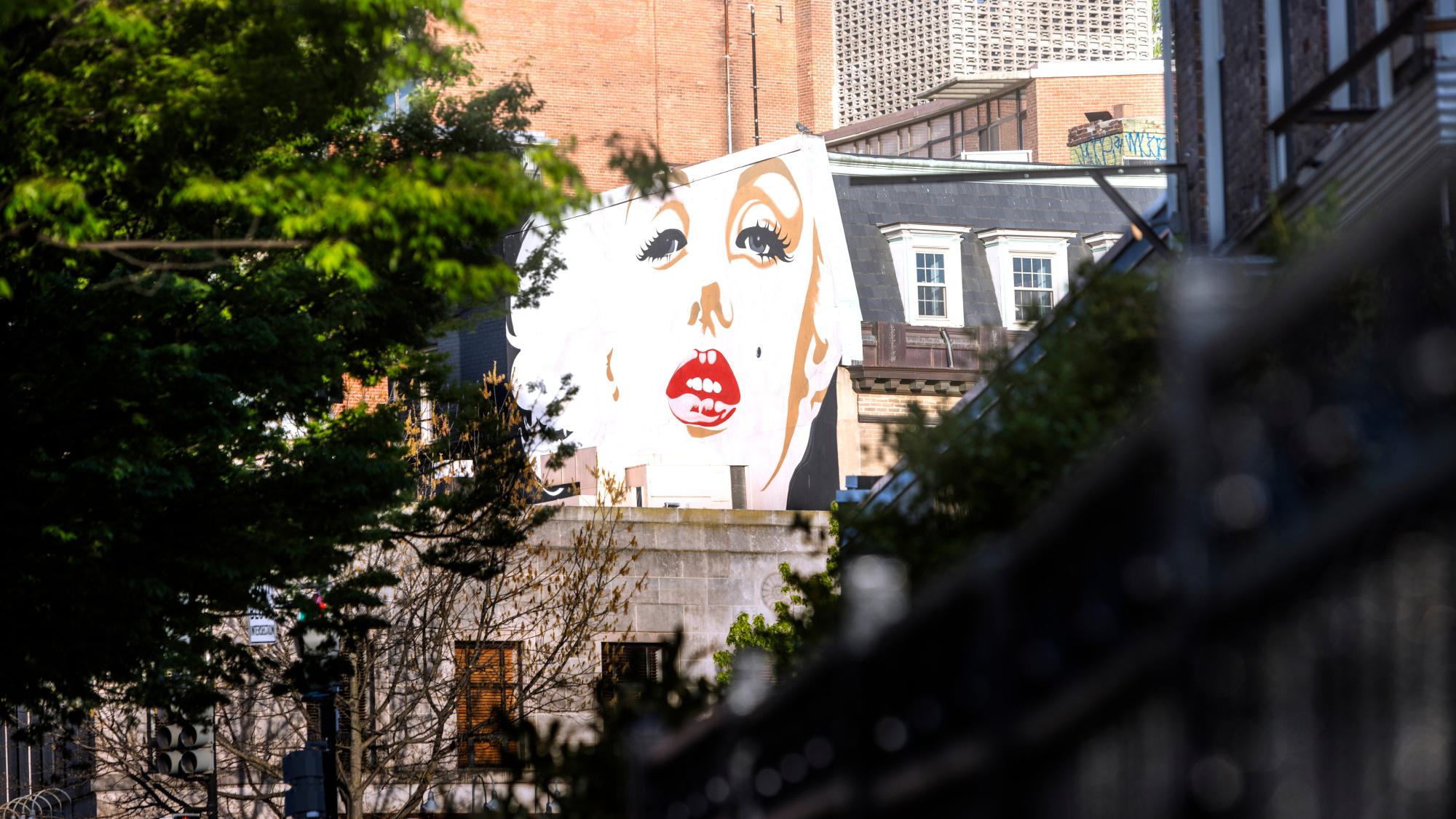
The Marilyn Monroe mural has been a neighborhood landmark since 1981. It was originally painted by artist John Bailey to brighten the side of an otherwise plain Connecticut Avenue building. Over the decades it’s been touched up, repainted, and modernized several times, becoming a pop-art icon.
Woodley Park borders one of the greenest stretches of Rock Creek Park. Miles of wooded trails, scenic overlooks, and picnic areas sit just steps from the neighborhood, giving residents an unusually direct connection to nature for a central DC address.
Architect Harry Wardman shaped much of the neighborhood’s look. In the early 20th century, Wardman built many of the grand apartment houses, hotels, and rowhomes that established Woodley Park’s distinctive architectural character—solid masonry, generous scale, and classic detailing.
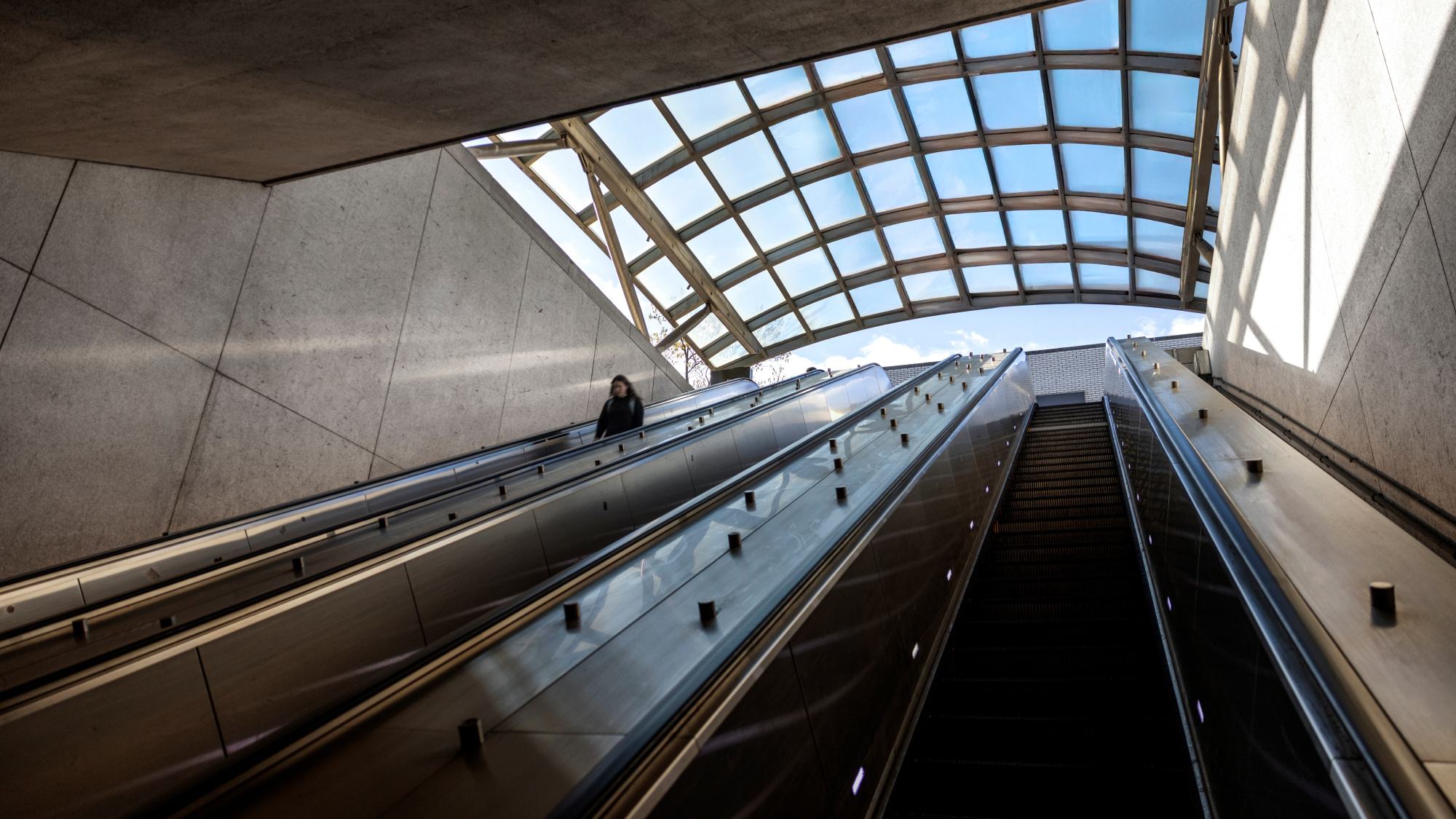
The Woodley Park Metro escalator is among the longest in DC. Descending about 204 feet, it carries riders deep into the Red Line station and is consistently ranked as one of the system’s longest continuous escalators.
Embassy Row begins just a few blocks south. As Connecticut Avenue approaches Dupont Circle, it shifts into a stately stretch of embassies and diplomatic residences, giving the area an unexpectedly international feel.
Woodley Park once had its own trolley tunnel. The Calvert Street streetcar tunnel allowed trolleys to pass under Connecticut Avenue—one of the only dedicated streetcar tunnels ever built in DC and a reminder of the neighborhood’s early transit history.
The Omni Shoreham Hotel hosted The Beatles in 1964. The iconic hotel has welcomed countless notable guests and has been the backdrop for several presidential inaugural balls.
The Taft Bridge connects three neighborhoods in minutes. Its sweeping arches carry Connecticut Avenue over Rock Creek Park, linking Woodley Park with Adams Morgan and Kalorama and serving as one of the city’s most important—and scenic—crossings.
You can sometimes hear lions roaring at night. Proximity to the National Zoo means the sounds of big cats occasionally drift into nearby streets, adding a surreal, only-in-Woodley-Park moment for residents.
Woodley Park sits on one of the highest elevations in DC. Perched along Connecticut Avenue’s ridge, the neighborhood sits well above the Rock Creek valley, giving certain streets sweeping views and a breezy, upland feel.
Rock Creek Park literally divides the neighborhood. The deep ravine splits Woodley Park from Adams Morgan and Kalorama, resulting in dramatic bridge crossings and pockets of forested scenery woven into daily life.
Local shops along Connecticut Avenue have stayed stable for decades. Independent cafés, restaurants, and family-run businesses anchor the corridor, giving it a small-town rhythm that residents love.
The neighborhood’s street names are among the most consistent in the city. Connecticut Avenue forms the east–west dividing line, and many of the cross streets follow an alphabetical pattern—Calvert, Cathedral, Devonshire—making Woodley Park unusually intuitive to navigate.
One of DC’s earliest planned apartment districts. Woodley Park helped popularize apartment living in the early 20th century, thanks largely to Harry Wardman’s upscale developments that framed apartments as elegant, desirable homes rather than secondary housing.
Calvert Street Bridge connects three major neighborhoods in minutes. Crossing the Duke Ellington Bridge takes you directly from Woodley Park into Adams Morgan and Kalorama, creating one of the city’s most seamless and scenic neighborhood-to-neighborhood links.